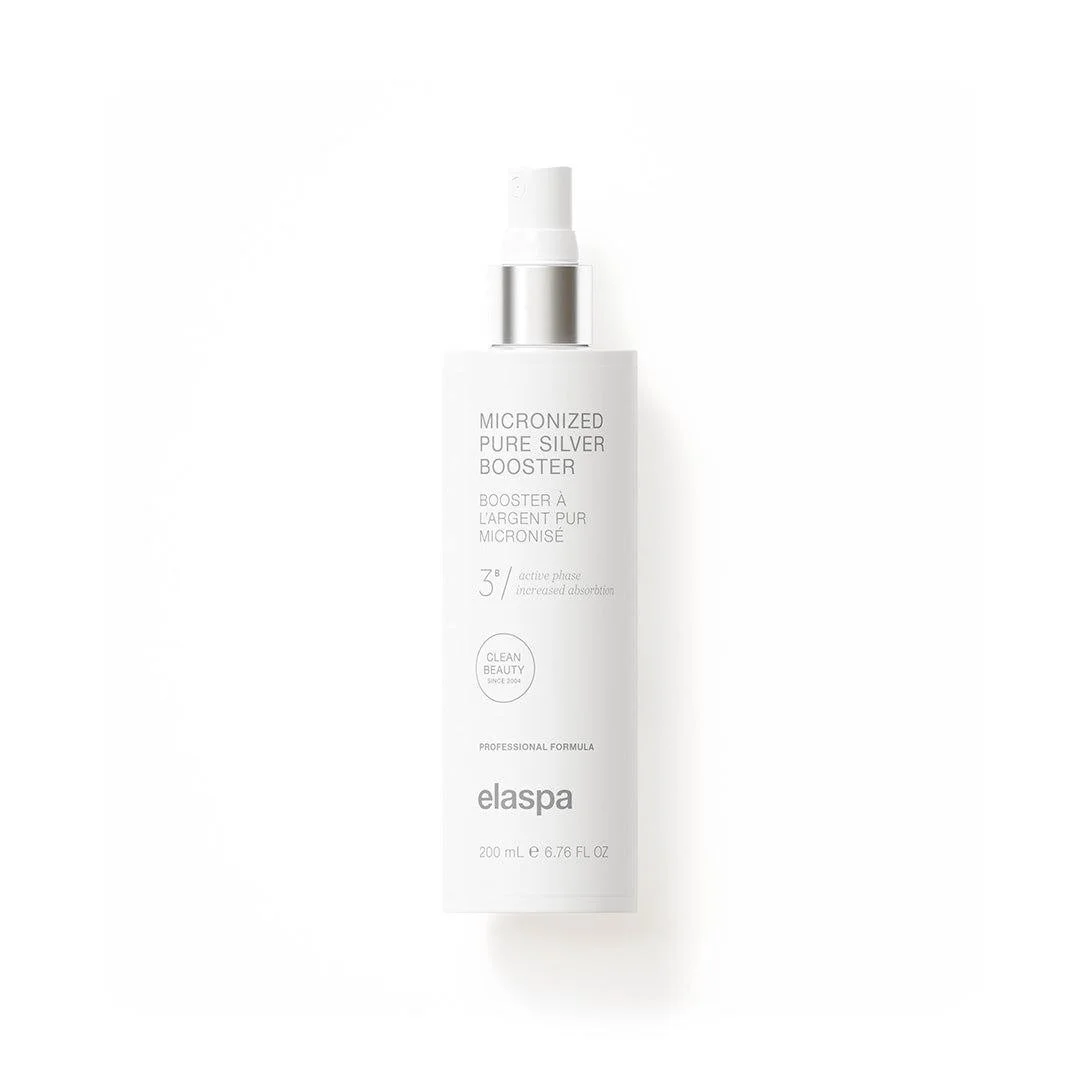
The Power of Micronized Silver in Skincare
Colloidal silver typically means tiny silver particles suspended in liquid. In skincare and clinical research, you’ll also see:
Ionic silver (silver ions released from a dressing/product)
Silver nanoparticles (AgNPs) (ultra-small particles engineered for controlled activity)
Silver-based wound dressings (e.g., silver hydrofiber products used post-op or for ulcers)
These forms can behave differently on skin—so it matters which type, at what concentration, and in what base/formula.
The strongest benefit: Antimicrobial support (especially in wound-related use)
Silver’s “heavy hitter” reputation is mostly built on its ability to reduce microbial load—helpful when the skin barrier is compromised (cuts, wounds, ulcers, post-procedure healing).
What research shows
A large clinical literature exists for silver-containing wound dressings, but results can be mixed depending on wound type and study quality.
A 2019 review highlights both sides: silver is widely used for antimicrobial support, but it can also be cytotoxic at higher exposures, potentially affecting keratinocytes and fibroblasts (cells involved in repair). Translation: dose and formulation matter.
Systematic review evidence suggests possible benefit in chronic infected wounds, while also noting limitations and heterogeneity across studies.
A 2025 systematic review/meta-analysis looked at silver dressings for lower-extremity ulcers, reflecting ongoing clinical interest in whether silver improves healing rates in real-world wound settings.
Skincare takeaway: The best-supported use-case for topical silver is supporting skin that is healing or at high risk of bacterial overload—not necessarily routine “glass skin” use.
Acne: A real clinical study suggests silver nanoparticles can perform comparably to an antibiotic gel
One of the most “skincare-relevant” clinical trials: a study compared silver nanoparticle gel vs 1% clindamycin gel (with benzoyl peroxide) for moderate acne and found no clinically significant difference, with silver nanoparticle gel showing effectiveness and a good safety profile in that setting.
There are also reviews discussing gold/silver nanoparticles as promising acne options, while clearly stating that more RCTs are needed to confirm their role.
Skincare takeaway: Silver (especially nano/ionic forms) may be a useful acne-support ingredient, especially when you’re targeting bacteria-related breakouts—but it’s not automatically “better” than established acne ingredients, and more high-quality trials would strengthen the claim.
Atopic dermatitis / irritated skin: promising topical concepts, but not universally “soothing”
Some formulation work (including microsilver + lipid carriers) has shown potential for improving irritated sensitive skin and light-to-medium atopic dermatitis in vivo.
There are also mechanistic papers describing silver ion delivery systems designed to increase local antimicrobial effect while supporting barrier function through the carrier system.
But important nuance: other research suggests very small silver nanoparticles could aggravate allergic-type inflammation in certain contexts (shown in allergy-prone models).
Skincare takeaway: For reactive skin, silver is not automatically “calming.” Some people may do well with specific formulations; others may find it irritating—so patch testing matters.
Can silver get into the skin?
This question matters for both efficacy and safety.
A well-cited in vivo human study found silver nanoparticles could be detected beyond the stratum corneum and into deeper dermal levels, but did not find systemic circulation in that context—suggesting minimal whole-body exposure from intact skin, at least under the conditions studied.
Skincare takeaway: Silver can interact below the surface—another reason formulation + dose matters, and why “more is better” is not the vibe.
What about “colloidal silver” as a wellness ingredient? Big caution: oral use is not supported, and can be harmful
This is where it’s important to be crystal clear in your blog:
NIH’s National Center for Complementary and Integrative Health (NCCIH) states there’s no scientific evidence to support health claims for colloidal silver supplements, and highlights safety risks.
Multiple PubMed case reports document argyria (blue-gray skin discoloration) after long-term colloidal silver ingestion.
Dermatology commentary also warns that colloidal silver remains readily available despite known risks from ingestion.
Skincare takeaway: Topical use in controlled products is one conversation. Consuming colloidal silver is a different one—and it’s strongly discouraged by reputable medical sources.
So… is colloidal silver “good” in skincare?
The evidence-based “yes”:
It can be useful when your goal is:
Antimicrobial support (especially compromised barrier, post-procedure-type contexts, wound-adjacent skincare)
Acne-support routines (some evidence suggests comparable performance to topical antibiotic gels in specific use)
The evidence-based “maybe”:
“Soothing” sensitive skin / dermatitis: depends heavily on formulation and individual response
The evidence-based “no / not proven”:
Broad claims like “detox,” “boosts collagen,” “anti-aging miracle,” or “cures skin conditions” as a general consumer product claim—those are not strongly supported by the best clinical literature.
How to use it responsibly (blog-friendly guidance)
If you’re going to include colloidal silver in a routine, keep it smart:
Patch test first (especially if you have eczema, allergies, or very reactive skin)
Use it targeted, not necessarily as an all-over daily forever product
Avoid stacking with multiple harsh actives at once if you’re irritation-prone
If your audience is acne-focused: position it as a support ingredient, not a replacement for proven options (benzoyl peroxide, retinoids, etc.) unless under professional guidance
Do not promote ingestion—and explicitly state why (with citations)
References (PubMed / NIH heavy hitters)
Silver nanoparticle gel vs clindamycin for acne (clinical trial).
Review: silver in wound care, benefits vs cytotoxicity considerations.
Systematic review: silver-releasing dressings in chronic wounds (evidence limitations noted).
Meta-analysis: impact of silver dressings on lower extremity ulcers.
In vivo human data: dermal penetration/absorption characteristics of silver nanoparticles.
Atopic dermatitis / irritated skin microsilver formulation research.
NIH NCCIH: colloidal silver claims lack evidence; safety concerns.
Argyria case reports linked to colloidal silver ingestion.
Dermatology warning/commentary on colloidal silver risks and availability.
If you want, I can also:
rewrite this in your brand voice (more luxe/esthetician tone, more “client-friendly”),
turn it into an SEO blog format with meta title + description + keywords,
and create a short “myth vs fact” sidebar for Instagram/carousel reuse.
can you turn this into a blog post for miss chelle's esthetics promoting elaspa's micronized silver booster
The Power of Micronized Silver in Skincare
Why I Use Elaspa’s Micronized Silver Booster at Miss Chelle’s Esthetics
When it comes to skin health, I’m not interested in trends — I’m interested in science, skin barrier integrity, and real results.
Silver in skincare has been studied extensively for its antimicrobial and skin-supportive properties, particularly in clinical and wound-care settings. But not all silver is created equal — and not all formulations are designed for professional facial work.
That’s where Elaspa’s Micronized Silver Booster stands out.
What Is Micronized Silver — And Why Does It Matter?
Silver has long been recognized in medical literature for its ability to help manage microbial load on compromised skin. Research in dermatology and wound care shows silver-based applications can:
Support skin in bacterial-prone environments
Help manage acne-associated bacteria
Assist compromised barrier recovery
Reduce surface-level microbial imbalance
But here’s the key: dose, particle size, and formulation matter.
“Micronized” silver means the particles are carefully reduced in size to allow controlled interaction at the skin surface — without the heavy, staining, or unsafe exposure risks associated with improper use.
This is not ingestible silver.
This is not DIY colloidal silver.
This is a professionally formulated, topical booster designed for skin health.
Why I Choose Elaspa’s Silver Booster Specifically
As many of you know, I am extremely selective about what enters my treatment room. Elaspa is known for:
Organic, botanical-based formulations
Medical-grade performance standards
Biomimetic delivery systems
Clean, professional-only positioning
Their Micronized Silver Booster isn’t just “silver in water.” It’s integrated into a formula that respects the skin barrier and works in synergy with hydration-supporting actives.
That matters.
Because while silver has antimicrobial properties, research also shows that excessive or poorly formulated silver exposure can be cytotoxic to skin cells. So we want:
✔ Controlled concentration
✔ Professional-grade formulation
✔ Intentional treatment use
And that’s exactly how I use it.
Who Benefits Most from Micronized Silver?
In my treatment room at Miss Chelle’s Esthetics, I incorporate the Silver Booster strategically for:
✨ Acne-prone skin
Some clinical studies comparing silver nanoparticle gels to traditional topical antibiotics show comparable effectiveness in certain acne cases. Silver may help reduce surface bacteria that contribute to inflammatory breakouts.
✨ Congested or post-extraction skin
After extractions or advanced treatments, the skin barrier is temporarily vulnerable. Silver can help support a cleaner healing environment.
✨ Reactive or compromised barrier
When skin is irritated from environmental stress, over-exfoliation, or breakouts, silver can help rebalance surface microbial stress — without aggressive stripping.
✨ Maskne / high-bacteria environments
Especially relevant for clients in healthcare or high-contact professions.
What It Does Not Do (Let’s Be Honest)
It is not:
A miracle anti-aging cure
A collagen replacement
A detox potion
A substitute for retinoids or prescription therapy
Silver is a supportive ingredient, not a magic wand.
And that’s exactly why I love it — it fits beautifully into a holistic skin strategy instead of pretending to be everything.
How I Use It in Treatments
I most often pair the Micronized Silver Booster with:
Barrier-repair facials
Acne protocols
Post-dermaplaning calming phases
Elapromed-enhanced treatments
High-performance organic hydration masks
Because skin health isn’t about blasting bacteria — it’s about restoring balance.
And balance is what creates glow.
Safety First: What You Should Know
Topical, professionally formulated silver is very different from oral colloidal silver supplements (which are not supported by reputable medical bodies and can cause permanent skin discoloration when misused).
We are talking about controlled, external, clinical-grade skincare application.
And as always — patch testing and professional guidance matter.
Why This Fits the Miss Chelle’s Philosophy
If you know me, you know I believe in:
Organic but high-performance
Clean but clinically informed
Luxurious but evidence-backed
Elaspa’s Micronized Silver Booster sits perfectly in that sweet spot.
It’s not flashy.
It’s not trendy hype.
It’s quiet science doing what it does best — supporting the skin so it can function the way it was designed to.
And when the skin functions properly?
That’s when the magic happens. ✨
If you’d like to experience how I incorporate Micronized Silver into a customized treatment plan, book a consultation at Miss Chelle’s Esthetics — and let’s create a protocol tailored to your skin.
Because healthy skin isn’t about trends.
It’s about strategy.
Why Your Skin Barrier Matters More Than Your Skincare Products
If your skincare stopped working, your skin barrier may be compromised. Learn why barrier health matters more than products—and how professional skincare restores balance.
Best Facial Treatments for Sensitive Skin in Winnipeg
Sensitive skin is common in Winnipeg. Learn how gentle facials, Elaspa European skincare, and non-invasive Elapromed technology calm irritation and restore skin health.
Why Elaspa European Skincare Delivers Medical-Grade Results Without Compromising Skin Health
Discover why Elaspa European Skincare is the unicorn of the industry—medical-grade performance paired with clean, organic, skin-respecting formulations.
Over-the-Counter vs Professional vs Medical-Grade Skincare — And Why Elaspa Is the Unicorn 🦄
Confused about over-the-counter, professional, and medical-grade skincare? Learn the key differences—and why Elaspa European Skincare delivers clean, medical-grade results in Winnipeg.